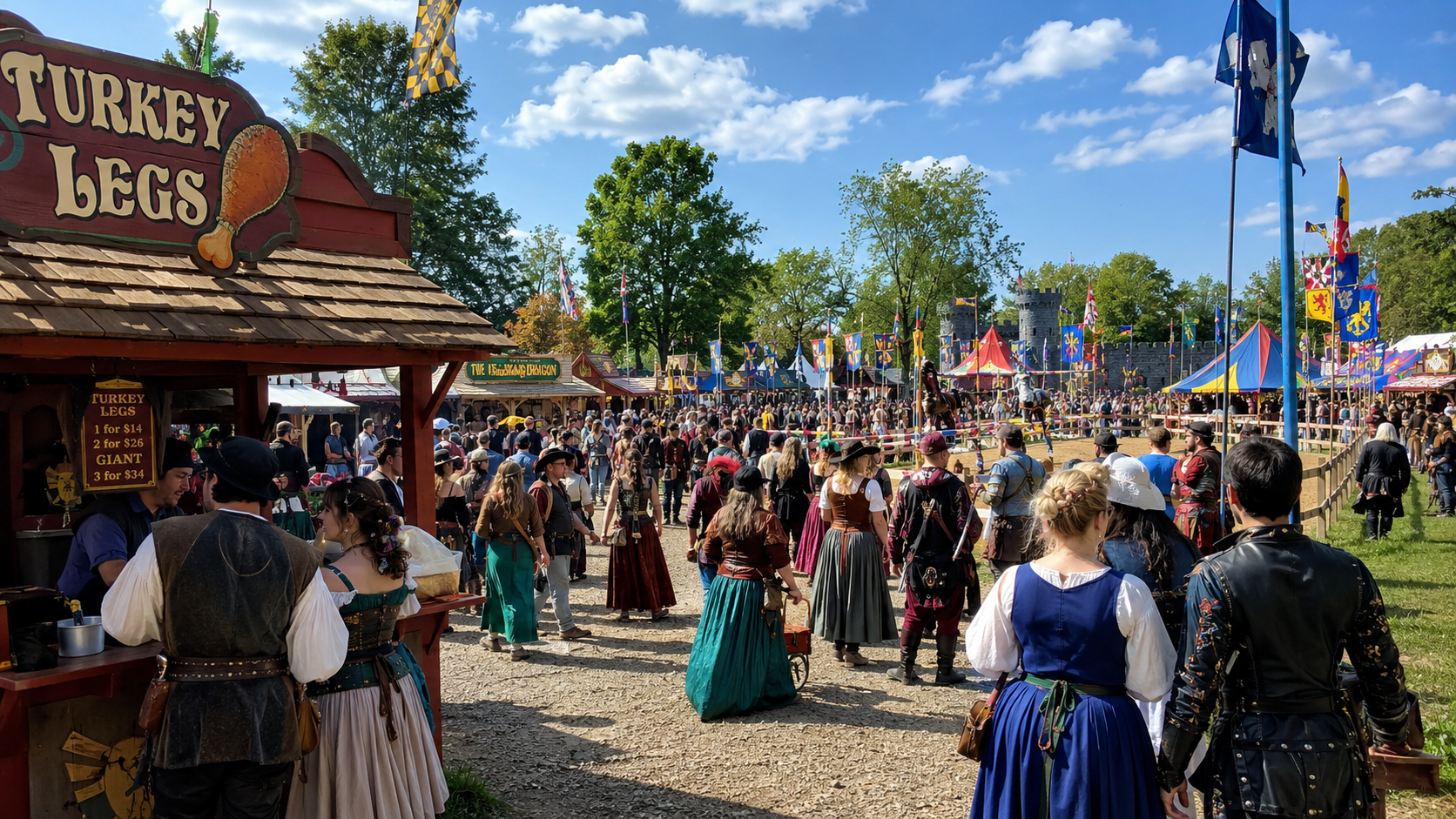
Before there was Comic-Con, before cosplay was a verb, before "nerd" became a compliment — there were Renaissance Faires. Dusty fields in Southern California where people dressed in doublets and bodices, spoke in terrible Elizabethan accents, and ate turkey legs the size of small children. And it was glorious.
I say this with the authority of someone who grew up around faire culture. The performers, the vendors, the regular attendees who returned weekend after weekend in increasingly elaborate costumes — these were the original cosplayers. They just did not know it yet.
The Seeds of a Subculture
Renaissance Faires started popping up across the United States in the 1960s and 1970s, born from the same countercultural impulse that gave us Woodstock and commune living. They were spaces where it was acceptable — encouraged, even — to be someone else for a day. A pirate. A wench. A knight. A bard. The appeal was not historical accuracy. It was permission. Permission to be theatrical, to be passionate, to be unashamedly weird in public.
This is the same impulse that drives someone to dress as a Mandalorian and walk the halls of San Diego Convention Center. The costumes changed. The spirit did not.
The Bridge Years
The transition from faire culture to convention culture happened gradually through the 1980s and 1990s. Star Trek conventions had been around since the early seventies, but they were small affairs — hotel ballrooms filled with people trading VHS tapes and debating the finer points of Klingon grammar. What Renaissance Faires contributed was the performative element. The idea that you did not just consume your fandom — you embodied it.
By the time Comic-Con began its transformation from a small San Diego comic book swap meet into a global cultural phenomenon, the groundwork had been laid by decades of faire-goers who understood that dressing up was not childish. It was an art form. It was community. It was a way of saying, "This is what I love, and I am not ashamed."
What Remained, What Changed
Modern convention culture has scaled to a degree that would be unrecognizable to the ren faire performers of the 1970s. San Diego Comic-Con draws over 130,000 attendees. Dragon Con fills downtown Atlanta. PAX sells out in minutes. The economics alone have changed beyond recognition — what was once a grassroots hobby is now a multi-billion dollar industry.
But walk through any convention floor and you will find the same energy that existed at those early faires. People creating things by hand. Strangers bonding over shared obsessions. The sheer joy of seeing someone who loves the same obscure thing you love. That feeling of belonging — of finding your people — has not changed at all.
The Unbroken Thread
There is a direct line from the pirate troupes performing sword fights at the Bristol Renaissance Faire to the elaborately choreographed lightsaber duels on YouTube. From the faire artisan selling hand-tooled leather journals to the Etsy creator selling 3D-printed props. From the bard singing bawdy songs on a hay-bale stage to the podcaster recording a live D&D session in front of thousands.
Nerd culture did not emerge fully formed from the internet age. It was cultivated over decades by people who were willing to be uncool in the pursuit of joy. Renaissance Faires were the greenhouse where those seeds first took root. Everything that followed — the conventions, the fandoms, the global community of self-identified geeks — grew from that same rich, slightly muddy soil.
And somewhere, on a dusty faire ground in California, a pirate troupe is still performing. Still weird. Still wonderful. Still planting seeds.